

Tiger Barbs (Puntigrus tetrazona)
Tiger Barbs (Puntigrus tetrazona)
Couldn't load pickup availability
Tiger Barb (Puntigrus tetrazona)
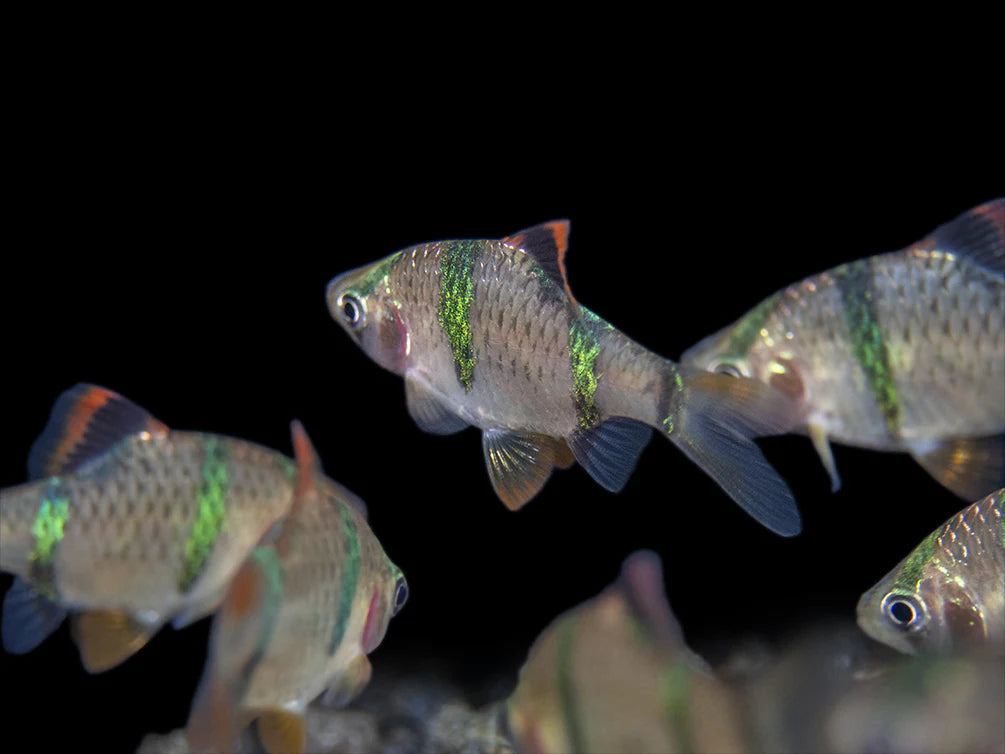
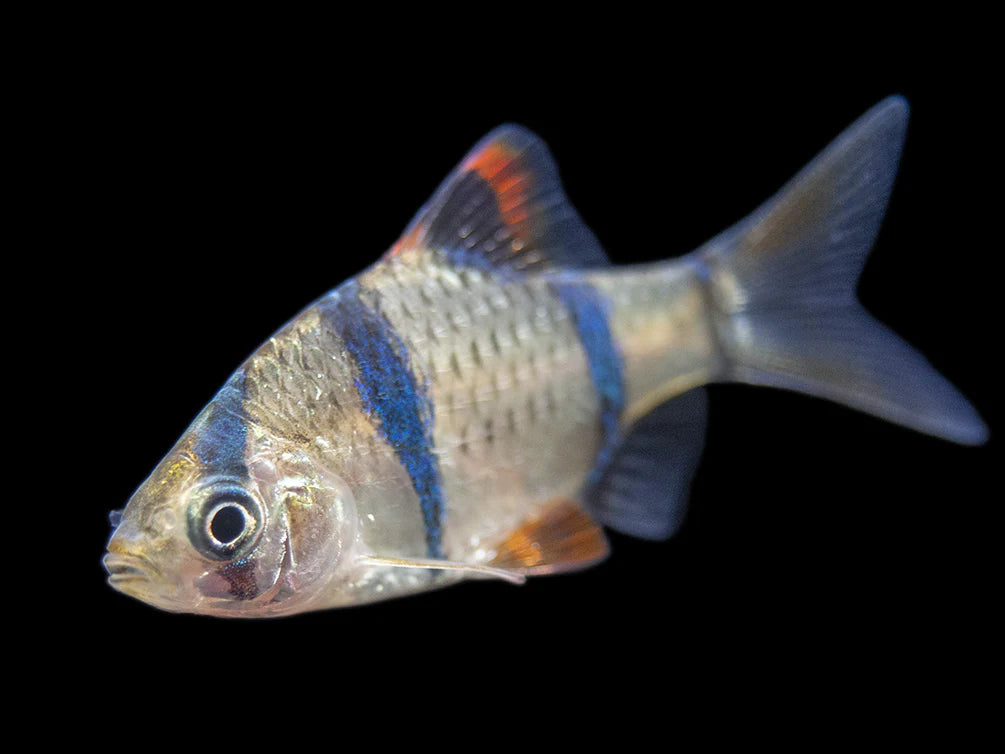
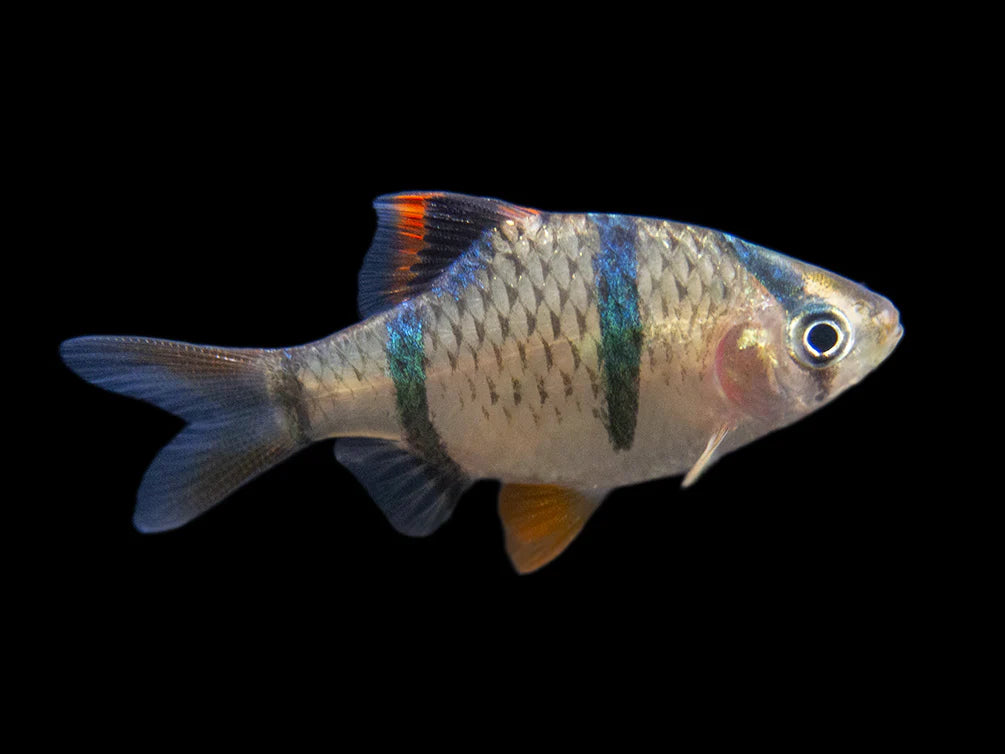
The Tiger Barb is one of the most recognisable and entertaining freshwater fish in the aquarium hobby. With its bold black stripes, warm orange colouration and energetic personality, a school of Tiger Barbs creates an impressive display full of movement and character.
These active fish are best kept in groups of 6 or more, with larger groups recommended where space allows. Keeping them in a good-sized school encourages natural behaviour and helps reduce fin-nipping towards other tankmates.
Quick Facts
-
Scientific Name: Puntigrus tetrazona
-
Common Name: Tiger Barb
-
Current Size: Approximately 3–4cm
-
Adult Size: Approximately 6–7cm
-
Origin: Southeast Asia
-
Diet: Omnivore
-
Temperature: 22–27°C
-
pH: 6.0–7.5
-
Temperament: Active / Semi-aggressive
-
Minimum Group Size: 6+
-
Breeding: Egg Scatterer
-
Sex: Unsexed
Overview
Tiger Barbs are active, social and inquisitive fish that spend much of their time swimming throughout the aquarium. Their distinctive striped pattern and bright orange fins make them particularly impressive when kept in a larger school.
While they can make excellent community fish in the right setup, Tiger Barbs are known for occasionally nipping fins, especially when kept in groups that are too small. A larger school helps keep their attention focused on each other and allows them to display more natural social behaviour.
Behaviour & Compatibility
Tiger Barbs are best kept with similarly active and robust species that can comfortably handle their energetic nature.
Suitable tankmates include:
-
Danios
-
Loaches
-
Corydoras
-
Larger active Tetras
-
Rainbowfish
-
Robust livebearers such as Platies
Avoid keeping Tiger Barbs with slow-moving or long-finned fish, as their fins can become tempting targets for nipping.
Generally avoid:
-
Bettas
-
Fancy Guppies
-
Angelfish
-
Other delicate or long-finned species
Aquarium Setup
Tiger Barbs appreciate an aquarium that provides a combination of open swimming space and planted areas.
Plants, rocks and driftwood can be used to create cover and visual barriers, while leaving plenty of open space for the school to swim together.
Good filtration and regular water changes are recommended, as Tiger Barbs thrive in clean, well-oxygenated water with stable parameters.
Feeding
Tiger Barbs are omnivores and are generally enthusiastic feeders.
A quality flake or small pellet should form the basis of their diet, supplemented with a variety of foods such as:
-
Brine shrimp
-
Bloodworms
-
Daphnia
-
Spirulina and vegetable-based foods
-
Other quality frozen or live foods
A varied diet will help promote healthy growth, vibrant colour and excellent overall condition.
Why We Love Tiger Barbs
Tiger Barbs are an excellent choice for aquarists wanting a tank that's active, colourful and full of personality. A large school swimming together can make an incredible centrepiece in a suitably sized community aquarium.
For the best display and behaviour, keep them in a group of at least 6 — but the bigger the school, the better!
Product photos are for reference only. As these are live fish, exact size, colour and markings may vary between individuals.
Share