
Royal Farlowella Whiptail Cat Fish
Royal Farlowella Whiptail Cat Fish
Couldn't load pickup availability
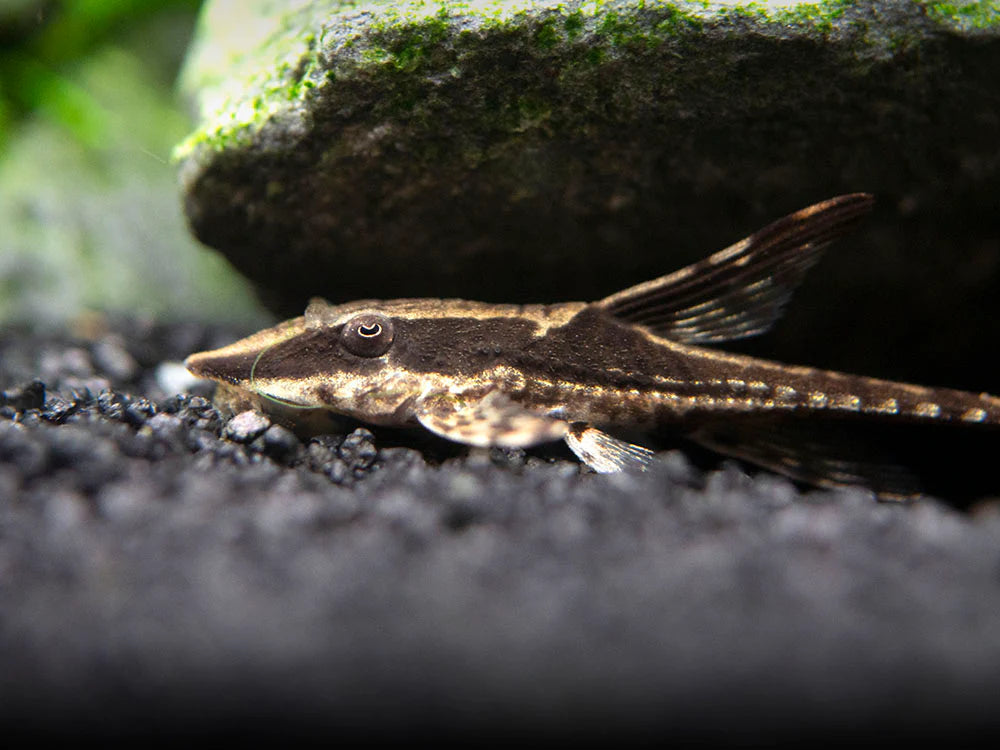
Royal Farlowella (Sturisoma panamense)
The Royal Farlowella, also known as the Twig or Whiptail Catfish, is a member of the Loricariidae family of South American suckermouth catfishes. While many suckermouth catfish species have yet to be bred on a major scale in aquariums, the Royal Farlowella has been successfully bred by several fish farms.
This species is highly distinctive, with an extremely thin, twig-like body and characteristic “streamer” extensions on its tail.
Care & Diet
The Royal Farlowella is primarily nocturnal, but it will often become more active during the day once established in an aquarium with plenty of driftwood, rockwork, and other hiding places.
Unlike some suckermouth catfish, such as Panaque species, the Royal Farlowella does not consume large amounts of wood. However, it may benefit from driftwood in the aquarium, particularly from feeding on the biofilm that naturally develops on its surface.
The Royal Farlowella generally will not bother aquarium plants and can help control algae, particularly when young. Provide a diet rich in vegetable matter, including high-quality vegetable flakes, sinking algae wafers, and pellets. It will also appreciate fresh vegetables such as shelled peas, spinach, zucchini, and cucumber.
Occasional meaty foods, such as bloodworms, can be offered sparingly—ideally once a week or less. Because this species feeds frequently, too much animal protein can be unhealthy and may also contribute to excessive waste in the aquarium.
Temperament & Compatibility
The Royal Farlowella is very peaceful and is compatible with most non-aggressive fish and invertebrates. Larger specimens may occasionally eat very small dwarf shrimp, particularly shrimp fry, although many aquarists successfully keep Royal Farlowella with established shrimp colonies.
The Royal Farlowella can reach approximately 8 inches (20.3 cm) in length. However, its exceptionally slender body means its bioload is considerably lower than that of many thicker-bodied fish of a similar length.
What We Like About This Fish
- Very peaceful and hardy, making it a great addition to many community aquariums.
- Reaches a maximum length of approximately 8 inches (20.3 cm) while maintaining a very slender body.
- Generally plant-safe and likely to help with algae control, especially as a juvenile.
- Scavenges and consumes uneaten fish food.
- Highly unique appearance and plenty of personality.
Recommended Tank Parameters
- Temperature: 72°–86°F (22°–30°C)
- pH: 6.5–7.5
- KH: 6–10 dKH
- Minimum tank size: 30 gallons
Care Guidelines
- Diet: Omnivore. Vegetable matter should make up the majority of the diet, while meaty foods should be offered sparingly—once a week or less.
- Social behavior: Generally solitary, although individuals may socialize more during breeding.
- Origin: Tank-bred; indigenous to South America.
- Average adult size: 8 inches (20.3 cm)
- Average purchase size: 1–3 inches (2.5–7.6 cm)
Share