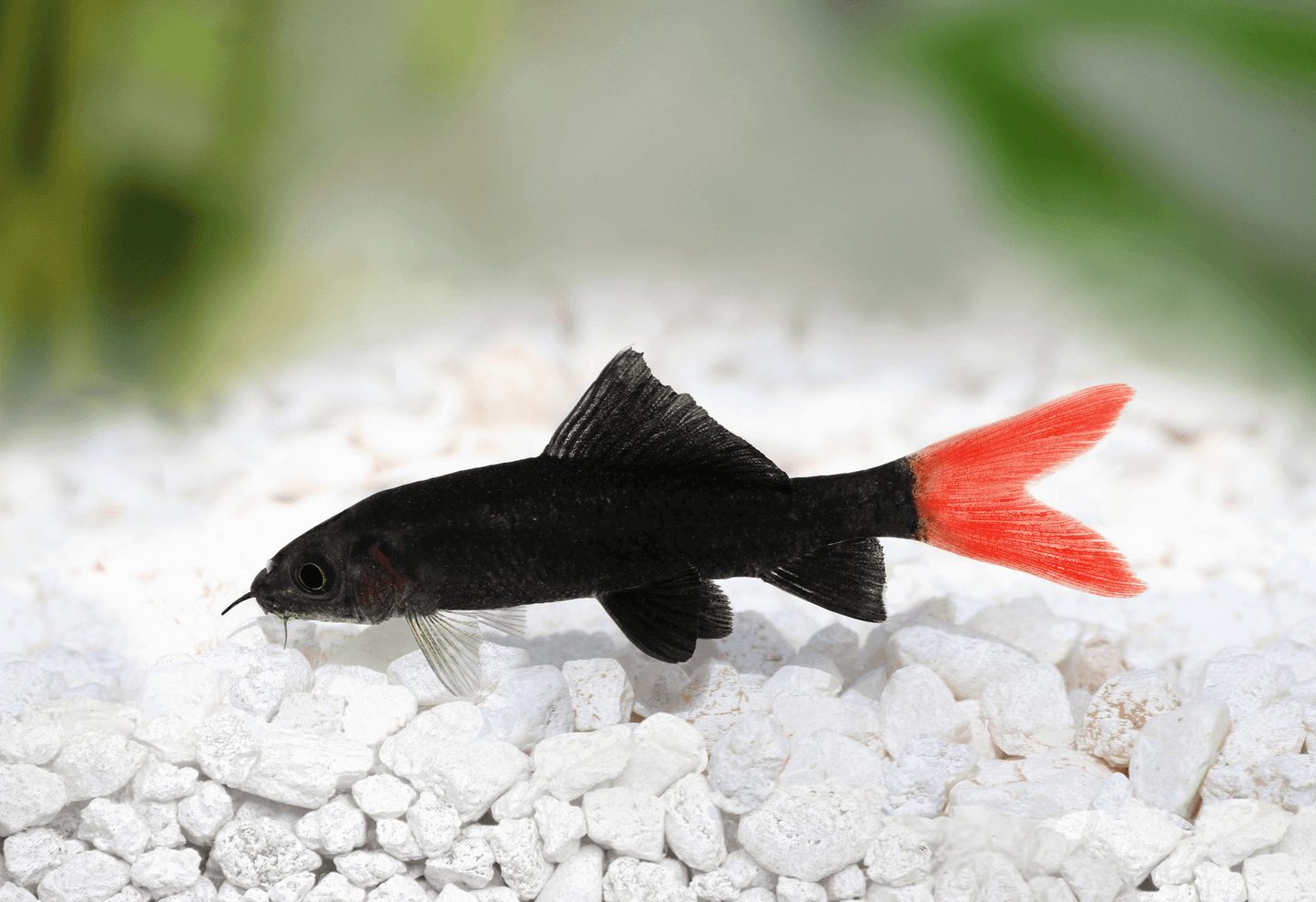

Red-Tailed Black Shark (Epalzeorhynchos bicolor)
Red-Tailed Black Shark (Epalzeorhynchos bicolor)
Couldn't load pickup availability
The Red-Tailed Black Shark is a striking freshwater fish known for its incredible contrast of a deep black body and brilliant red tail. Active, intelligent and full of personality, this species makes an impressive feature fish in a suitably sized aquarium.
Despite its common name, the Red-Tailed Black Shark isn't actually a shark — it belongs to the Cyprinid family and is related to Barbs, Rasboras and other carp-like fish.
Quick Facts
-
Scientific Name: Epalzeorhynchos bicolor
-
Common Name: Red-Tailed Black Shark
-
Origin: Thailand
-
Adult Size: Approximately 12–15cm
-
Diet: Omnivore
-
Temperature: 22–27°C
-
pH: 6.0–7.5
-
Temperament: Semi-aggressive / Territorial
-
Tank Level: Bottom to Mid-Water
-
Minimum Tank Size: 150L+ recommended
-
Breeding: Egg Layer
-
Sex: Unsexed
Overview
Red-Tailed Black Sharks are highly active fish with a bold personality and distinctive appearance. A healthy adult develops a beautiful velvety-black body contrasted by an intense red tail, making them one of the most recognisable freshwater aquarium fish.
They can initially be shy when introduced to a new aquarium and may spend time hiding. Once settled, however, they generally become much more confident and can frequently be seen patrolling their territory.
Behaviour & Compatibility
Red-Tailed Black Sharks are territorial, particularly as they mature. They will often claim a cave or section of the aquarium and may chase other fish that enter their territory.
For most aquariums, we recommend keeping only one Red-Tailed Black Shark per tank.
They are generally more interested in defending their territory than actively hunting other fish, making carefully selected community setups possible.
Suitable tankmates can include:
-
Barbs
-
Danios
-
Rainbowfish
-
Larger Tetras
-
Other active, robust community fish
Extra care should be taken with other bottom-dwelling or similarly shaped fish, as these are more likely to trigger territorial behaviour.
Avoid keeping them with very timid, slow-moving or delicate species that may become stressed by chasing.
Aquarium Setup
A spacious, well-structured aquarium is important for this active species.
Provide plenty of:
-
Driftwood
-
Rocks
-
Caves
-
Hardy plants
-
Shaded hiding areas
-
Open swimming space
Creating visual barriers with wood, rocks and plants can help establish clear territories and reduce aggression towards tankmates.
Good filtration and regular water changes are recommended, along with plenty of water movement and oxygenation.
Feeding
Red-Tailed Black Sharks are omnivores and should be offered a varied diet containing both plant and protein-based foods.
Suitable foods include:
-
Quality sinking pellets
-
Algae and spirulina wafers
-
Flake foods
-
Brine shrimp
-
Daphnia
-
Bloodworms
-
Blanched courgette
-
Spinach and other suitable vegetables
They will also graze on algae and biofilm around the aquarium, but shouldn't be purchased solely as an algae-control fish.
A varied diet will help maintain their deep black body colour, brilliant red tail and overall condition.
Breeding
Breeding Red-Tailed Black Sharks in the home aquarium is extremely uncommon.
Most specimens available within the aquarium trade are commercially captive-bred, allowing this iconic species to remain available to hobbyists despite its extremely limited status in the wild.
Why We Love Them
Few freshwater fish have the instantly recognisable appearance of a Red-Tailed Black Shark.
Their jet-black body, vivid red tail and confident personality make them an incredible feature fish in the right aquarium.
They're best suited to aquarists who can provide them with plenty of space, structure and appropriately chosen tankmates.
Product photos are for reference only. As these are live fish, exact size, colour and markings may vary between individuals.
Share