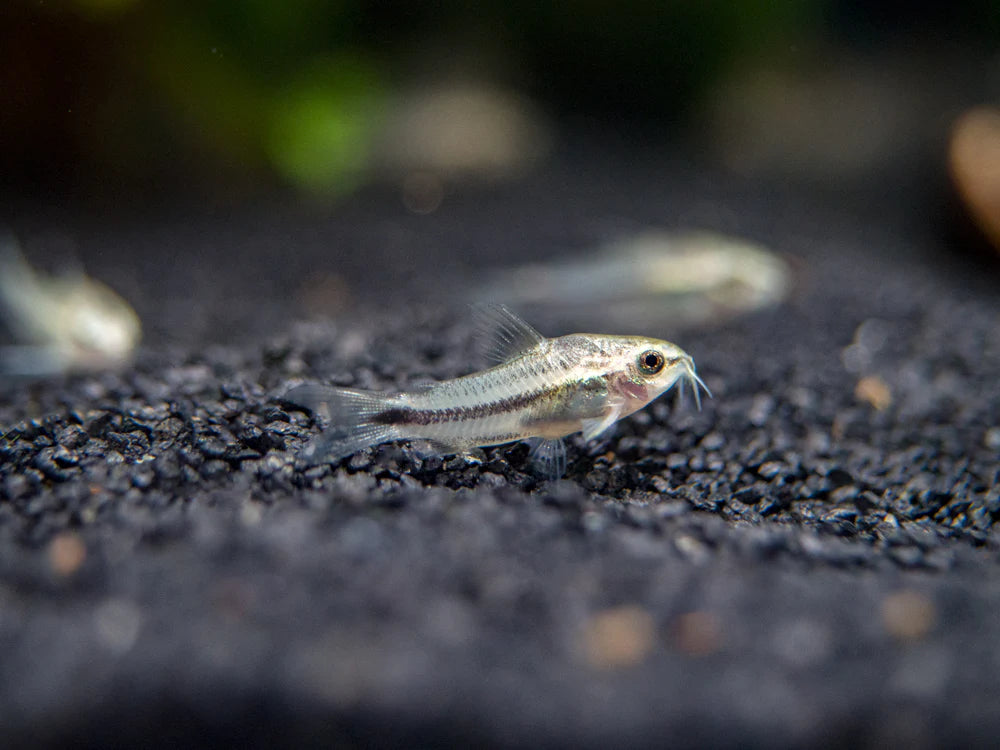


Pygmy Corydoras (Corydoras pygmaeus)
Pygmy Corydoras (Corydoras pygmaeus)
Couldn't load pickup availability
Pygmy Cory (Corydoras pygmaeus)
The Pygmy Cory is one of the smallest and most charming Corydoras species available in the aquarium hobby. Peaceful, social and constantly active, these tiny catfish are an excellent choice for nano, planted and peaceful community aquariums.
Unlike many larger Corydoras that spend most of their time on the bottom, Pygmy Corys will often swim together through the middle levels of the aquarium, making a good-sized school fantastic to watch.
Quick Facts
-
Scientific Name: Corydoras pygmaeus
-
Common Name: Pygmy Cory
-
Origin: South America
-
Adult Size: Approximately 3cm
-
Diet: Omnivore
-
Temperature: 22–26°C
-
pH: 6.0–7.5
-
Temperament: Very Peaceful
-
Minimum Group Size: 6+ (larger groups recommended)
-
Tank Level: Bottom to Mid-Water
-
Sex: Unsexed
Overview
Pygmy Corys are gentle, social schooling fish that really come into their own when kept in a good-sized group. While 6 should be considered the minimum, groups of 10 or more can produce much more confident and natural behaviour.
Their tiny size and peaceful temperament make them particularly well suited to planted nano aquariums and communities containing other small, peaceful fish.
Behaviour & Compatibility
Pygmy Corys are extremely peaceful and should be housed with similarly gentle tankmates.
Suitable tankmates include:
-
Small Tetras
-
Small Rasboras
-
Ember Tetras
-
Celestial Pearl Danios
-
Small peaceful Gouramis
-
Otocinclus
-
Other small peaceful Corydoras
-
Adult dwarf shrimp
They may occasionally eat very small newborn shrimp, but are generally considered suitable for aquariums containing adult dwarf shrimp.
Avoid housing them with large, aggressive or highly boisterous fish that may intimidate them or view them as food.
Aquarium Setup
A fine sand or smooth substrate is ideal for Pygmy Corys. Like other Corydoras, they enjoy searching through the substrate for food using their sensitive barbels.
Avoid sharp or coarse gravel that could potentially damage their barbels and underside.
A planted aquarium with driftwood, shaded areas and plenty of cover will help them feel secure. Make sure there is also open swimming space, as Pygmy Corys regularly leave the bottom and school together through the water column.
Clean, well-filtered water and stable parameters are important for keeping them healthy.
Feeding
Despite sometimes being described as scavengers, Pygmy Corys need to be intentionally fed and shouldn't be expected to survive solely on leftover food.
Their small mouths mean appropriately sized foods are important. A varied diet can include:
-
Small sinking pellets
-
Crushed quality flakes
-
Micro wafers
-
Frozen or live baby brine shrimp
-
Daphnia
-
Finely chopped or appropriately sized frozen foods
Providing a varied diet will help keep your Pygmy Corys healthy, active and in excellent condition.
Why We Love Them
Pygmy Corys pack a huge amount of personality into a tiny fish. Their peaceful nature, small adult size and unusual mid-water schooling behaviour make them a fantastic addition to smaller planted and community aquariums.
For the best display, keep them in a group of 6 or more — although 10+ is even better if your aquarium has the space.
Product photos are for reference only. As these are live fish, exact size, colour and markings may vary between individuals.
Share