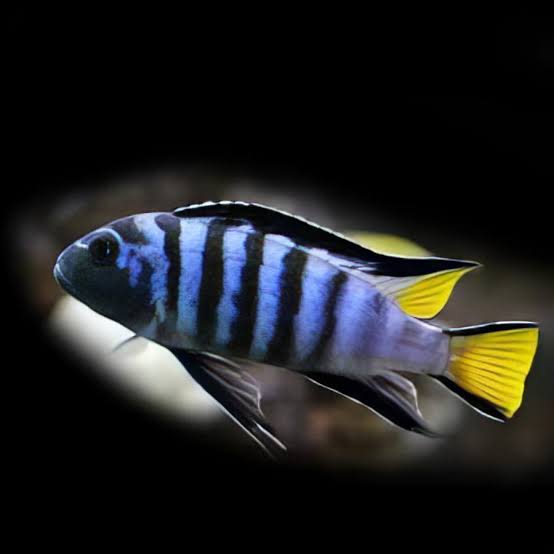

Mpanga African Cichlid (Pseudotropheus sp. “elongatus Mpanga”)
Mpanga African Cichlid (Pseudotropheus sp. “elongatus Mpanga”)
Couldn't load pickup availability
Mpanga African Cichlid Care
A striking Lake Malawi Mbuna with bold blue-and-black markings and flashes of yellow through the fins!
The Mpanga Cichlid is an energetic, rock-dwelling African cichlid valued for its intense colour and confident personality. Males develop vivid blue vertical bands with bright yellow edging on the fins, making them an impressive addition to a carefully planned Mbuna aquarium.
Scientific name: Pseudotropheus sp. “elongatus Mpanga”
Also known as: Mpanga Mbuna / Elongatus Mpanga
Origin: Lake Malawi, Africa
Adult size: Approximately 10–12 cm
Care level: Intermediate
Temperament: Aggressive and territorial
- Tank requirements: We recommend an aquarium of at least 250 litres. Provide plenty of rockwork, caves and visual barriers while leaving open areas for swimming.
- Water parameters: Maintain a temperature of 24–28°C and a pH between 7.5 and 8.6. Hard, alkaline water with stable conditions is essential.
- Tank mates: Best kept with similarly sized and confident Lake Malawi Mbuna. Avoid peaceful community fish, slow-moving species and Mbuna with very similar colours.
- Group size: Keep one male with several females where possible. Avoid keeping multiple males unless the aquarium is large, heavily decorated and appropriately stocked.
- Diet: Mpanga Cichlids are primarily algae-grazing omnivores. Feed a quality spirulina-based Mbuna pellet or flake, supplemented with vegetable-rich foods. Avoid excessive amounts of fatty or high-protein food.
- Breeding: This species is a maternal mouthbrooder. After spawning, the female carries the fertilised eggs and developing fry in her mouth until they are ready to swim independently.
With the right setup and tank mates, Mpanga Cichlids are active, colourful fish that make an outstanding addition to a Lake Malawi display.
Taxonomic references may also place members of the elongatus group within the genus Chindongo, although this Mpanga form remains widely traded as Pseudotropheus sp. “elongatus Mpanga.”
Share