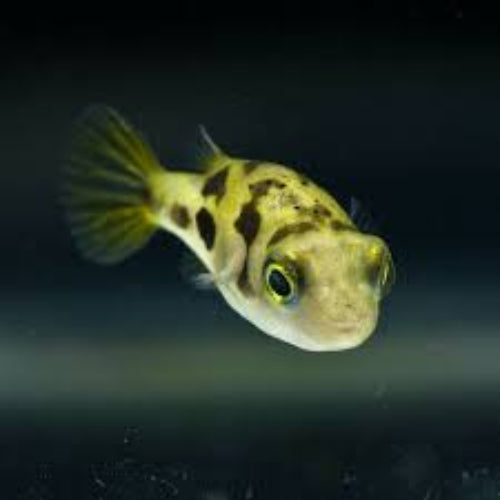


Indian Dwarf Pea Puffer (Carinotetraodon travancoricus)
Indian Dwarf Pea Puffer (Carinotetraodon travancoricus)
Couldn't load pickup availability
Indian Dwarf Pea Puffer (Carinotetraodon travancoricus)
This nano-sized, fully freshwater pufferfish is full of personality and a fascinating addition to small and medium aquariums.
The Indian Dwarf Pea Puffer is a popular choice for nano and planted tanks due to its distinctive and interactive personality. While it can be fairly aggressive and territorial, under the right conditions it can thrive in community aquariums with small fish, plants, and some invertebrates.
A key to success is providing ample space and décor. Males are particularly territorial and will often claim and defend areas, so including plenty of plants, rocks, and driftwood helps break lines of sight and create distinct territories. This puffer is relatively slow-moving and cannot keep up with fast-moving tetras, rasboras, barbs, danios, or rainbowfish. It will attack the fins of slow-moving, long-finned fish, so species like bettas are not suitable tankmates.
Dry foods are often ignored by this species. Frozen bloodworms and other meaty frozen foods are preferred. In the wild, its diet consists mostly of crustaceans and snails, so dwarf shrimp are not suitable tankmates. On the positive side, Indian Dwarf Pea Puffers are excellent at controlling small snails, including nuisance bladder snails commonly found in planted tanks.
If you’re looking for a small, unique, and engaging fish for your planted aquarium, the Indian Dwarf Pea Puffer is an ideal choice.
What We Like About This Fish
-
Highly intelligent with a lively and endearing personality
-
Compatible with many other small fish
-
Safe with plants
-
Excellent for controlling nuisance snails
-
Fully freshwater species
Recommended Tank Parameters
-
Temperature: 22–28°C (72–82°F)
-
pH: 6.0–7.0
-
KH: 5–15 dKH
-
Minimum tank size: 10 gallons for a single specimen; 30+ gallons for a small group
Care Guidelines
-
Diet: Carnivorous. Prefers frozen foods such as bloodworms; dry foods are often ignored but can sometimes be accepted by groups.
-
Social behavior: Territorial but manageable in small groups with sufficient space and décor.
-
Origin: Tank-bred, indigenous to India
-
Average adult size: 2.5 cm (1 inch)
-
Average purchase size: 0.63–2.5 cm (1/4–1 inch)
Sample photo is for reference only. Exact fish may vary in size and colour.
Share