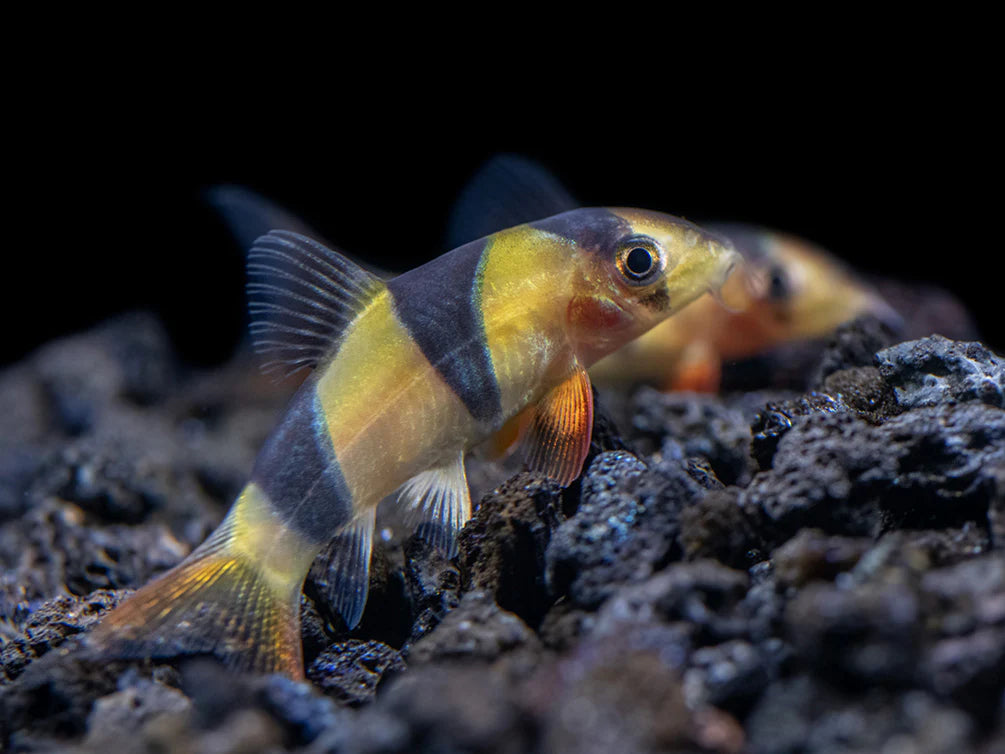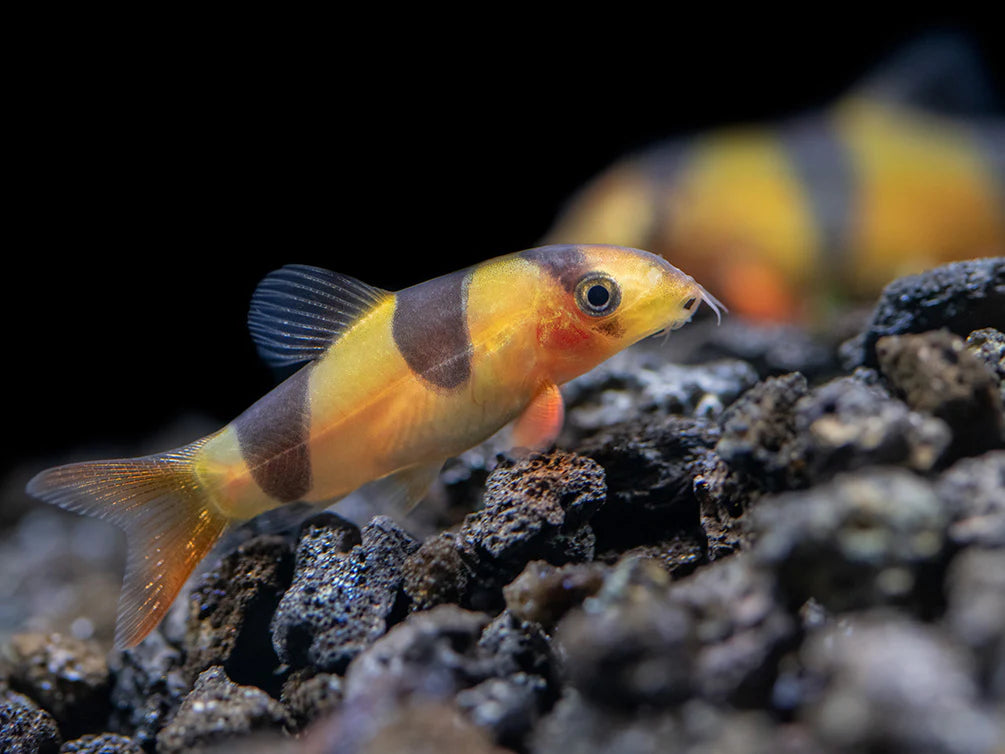


Clown Loach (Chromobotia macracanthus)
Clown Loach (Chromobotia macracanthus)
Couldn't load pickup availability
Clown Loach (Chromobotia macracanthus)
The Clown Loach is a favourite in the aquarium hobby, well loved for its bright colours, lively nature, and curious personality. With proper care, these long-lived fish can grow to impressive sizes.
Highly active and social, Clown Loaches thrive across a wide temperature range and get along with many other fish species. They are omnivores and require a diet that includes both meaty foods and vegetable matter. While they accept high-quality dry foods, it is important to also offer live or frozen foods regularly. They may occasionally nibble on soft-leaf plants but typically leave tougher plants such as Anubias, Java Fern, and Moneywort alone. In well-fed, larger aquariums, they rarely damage established plants.
These fish require an aquarium with plenty of plants, rocks, and driftwood to explore and hide among, which helps reduce stress and keeps them active. Open swimming space is equally important. Clown Loaches display complex schooling behaviour and often compete to lead the group. While this may appear aggressive, it does not result in real fighting and is a normal part of their social structure. Keeping at least 6–8 Clown Loaches together helps minimise stress and potential aggression. A secure lid is essential, as they are known to jump.
They do best in clean, well-oxygenated water with moderate to high flow. Although generally peaceful, their energetic behaviour can overwhelm very passive fish. Avoid housing them with slow-moving, timid, or long-finned species. They do well with other fast-moving, hardy fish. Clown Loaches are excellent at controlling pest snail populations but may prey on larger ornamental snails and shrimp.
Although they grow slowly, especially after reaching 10–15 cm (4–6 inches), Clown Loaches eventually become quite large and require a spacious aquarium, particularly as they must be kept in groups.
What We Like About This Fish
-
Bright and beautiful coloration
-
Extremely active and bold, always swimming and foraging
-
Adaptable to a variety of water conditions
-
Active in the middle and bottom areas of the tank
-
Ideal for large aquariums
Recommended Tank Parameters
-
Temperature: 24–30°C (75–86°F) with high dissolved oxygen at higher temperatures
-
pH: 6.2–7.5
-
KH: 1–12 dKH
-
Minimum tank size: 180+ gallons for a group of full-grown adults
Care Guidelines
-
Diet: Omnivorous. Requires a mix of live and frozen meaty foods (cyclops, daphnia, artemia, tubifex, bloodworms), high-quality dry foods, and some vegetables and fruits such as cucumber, zucchini, blanched spinach, and melon
-
Social behaviour: Must be kept in schools of 6–8 or more for healthy social interaction and to prevent stress or aggression
-
Origin: Borneo and Sumatra
-
Average adult size: 20–30 cm (8–12 inches), with older females sometimes growing larger
-
Average purchase size: Approximately 5 cm
Sample photo is for reference only. Exact fish will vary in size and colour.
Share