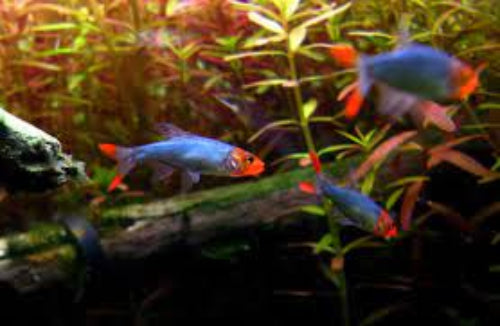


Asian Rummy Nose (Sawba resplendens)
Asian Rummy Nose (Sawba resplendens)
Couldn't load pickup availability
Rummy Nose Rasbora (Sawbwa resplendens)
The Rummy Nose Rasbora, also known as the Asian Rummy Nose, is a stunning small schooling fish known for its distinctive colouration, peaceful temperament and active behaviour.
Mature males are particularly impressive, developing a bright red nose and red-tipped tail against a beautiful silvery-blue body. Their small size and striking appearance make them an excellent choice for planted and peaceful cooler-water aquariums.
Despite sometimes being called the Asian Rummy Nose Tetra, this species is not actually a Tetra and is unrelated to the South American Rummy Nose Tetras.
Quick Facts
-
Scientific Name: Sawbwa resplendens
-
Common Name: Rummy Nose Rasbora / Asian Rummy Nose
-
Origin: Myanmar
-
Adult Size: Approximately 2.5–3.5cm
-
Diet: Omnivore / Micropredator
-
Temperature: 18–24°C
-
pH: 6.5–8.0
-
Temperament: Peaceful
-
Minimum Group Size: 6+ (larger groups recommended)
-
Tank Level: Mid to Upper Water
-
Sex: Unsexed
Overview
Rummy Nose Rasboras are peaceful, active and social fish that are best kept in groups.
A group of at least 6 is recommended, although larger groups of 10 or more can create a much more impressive display and encourage confident, natural behaviour.
Males regularly display towards one another, showing off their colour and competing for the attention of females. This makes a larger group particularly interesting to watch.
Behaviour & Compatibility
Rummy Nose Rasboras have a gentle and peaceful temperament and are best housed with other small, non-aggressive species that enjoy similar cooler water temperatures.
Suitable tankmates can include:
-
White Cloud Mountain Minnows
-
Celestial Pearl Danios
-
Small Danios
-
Other peaceful cool-water nano fish
-
Small Corydoras suited to similar temperatures
-
Adult dwarf shrimp
They can generally be kept with adult dwarf shrimp, although very small shrimp fry may potentially be eaten.
Avoid keeping them with large, aggressive or overly boisterous fish that may intimidate them or outcompete them at feeding time.
It's also important to consider temperature when choosing tankmates, as Rummy Nose Rasboras generally prefer cooler conditions than many common tropical aquarium fish.
Aquarium Setup
A well-planted aquarium provides an excellent environment for Rummy Nose Rasboras.
They look particularly impressive against a darker substrate with plenty of green plants, while floating plants can help create shaded areas and make the fish feel more secure.
Provide plenty of plant cover around the sides and back of the aquarium while leaving open swimming areas for the group.
Gentle to moderate water movement is suitable, along with good filtration and regular water changes.
Excellent water quality and stable parameters are important for keeping these little fish healthy and displaying their best colour.
Feeding
Rummy Nose Rasboras have small mouths and should be offered appropriately sized foods.
A varied diet can include:
-
Quality micro pellets
-
Fine or crushed flakes
-
Baby brine shrimp
-
Daphnia
-
Microworms
-
Finely chopped bloodworms
-
Other appropriately sized frozen or live foods
Regularly offering small live and frozen foods can help encourage excellent colour, condition and natural feeding behaviour.
Male & Female Colouration
One of the most interesting features of this species is the difference between males and females.
Males develop the characteristic bright red nose and red markings on the tail, along with a beautiful silvery to blue body.
Females are generally more subdued in colour, with a silvery body and a fuller shape when mature.
Keeping both sexes together can encourage males to display their strongest colouration.
Why We Love Them
Rummy Nose Rasboras are something a little different from the typical tropical schooling fish.
Their combination of tiny size, peaceful personality, fascinating social behaviour and incredible male colouration makes them an outstanding choice for planted aquariums.
A large group of mature males and females displaying amongst lush green plants can look absolutely stunning.
For the best behaviour and display, keep them in a group of at least 6 — although 10+ is even better where space allows.
Product photos are for reference only. As these are live fish, exact size, colour and markings may vary between individuals.
Share